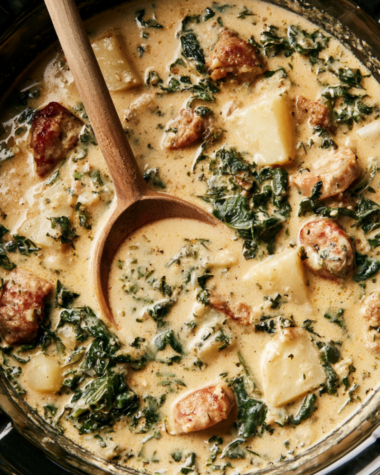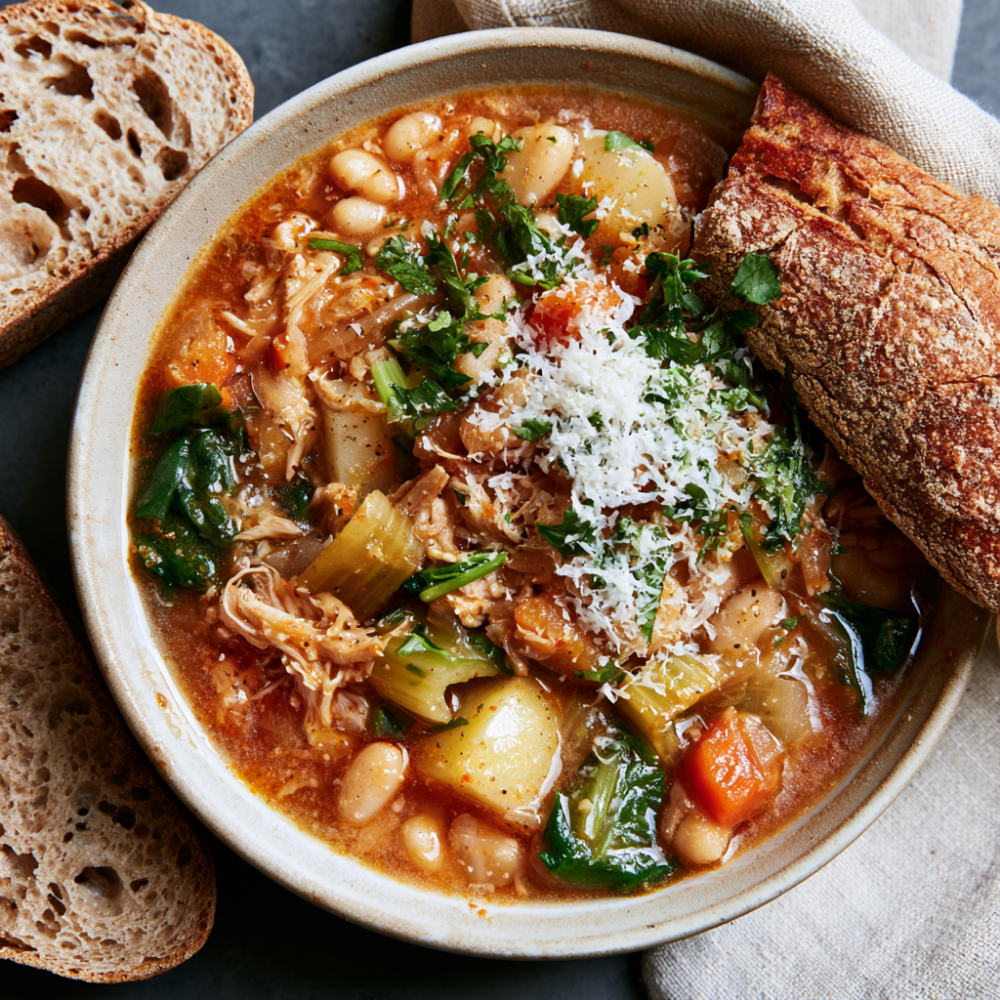

Vegetable soup has a reputation problem. It’s the soup people think of as light, watery, and vaguely virtuous — a bowl of broth with vegetables floating in it that leaves you hungry an hour later and reaching for a slice of bread to make up for it.
This version fixes that. It’s a genuinely hearty soup with a rich, velvety base, tender root vegetables, creamy cannellini beans, and shredded chicken. Each serving delivers about 32–35 grams of protein, which makes it a real dinner rather than a side dish pretending to be one.
The secret is a two-part strategy. First, partially mash the beans to release their starch and create a naturally creamy broth without any cream. Second, the chicken is already cooked, so add it during the final 20–30 minutes—just long enough to warm through without turning dry and stringy.
One honest thing worth knowing: bone broth is not the protein powerhouse the internet claims. Most commercial bone broths have 6–9 grams of protein per cup, and that protein is collagen, an incomplete protein—it lacks tryptophan, so it can’t build muscle on its own the way complete proteins can.
Bone broth adds flavor and depth, but the protein in this soup comes from the chicken and beans. Use bone broth if you like the flavor, but don’t count on it for protein.
And a second honest note: the soup thickens as it sits. The beans, potatoes, and vegetables continue releasing starch into the broth overnight. What looks brothy on day one will be noticeably thicker on day two. That’s a feature, not a bug — but it means you may need to add a splash of broth when reheating.
Why This Crockpot Vegetable Soup Works
The bean-mashing technique creates creaminess without cream. Canned cannellini beans hold their shape through a slow cook, so the recipe calls for mashing about a cup of them before they go in. This releases their starch and gives the finished soup a velvety body that tastes rich but contains no dairy.
The immersion blender pulse is a finishing touch, not a second thickening step. Two or three quick pulses in different areas of the pot mash some of the potatoes and beans, thickening the broth without turning the soup into a purée.
The mashed beans do the heavy lifting — the blender refines the texture.
Add the chicken at the end. Since it’s already cooked, it only needs 20–30 minutes to warm through. Adding it at the start means it spends hours in the slow cooker and turns dry and stringy.
Acid goes in at the end. A squeeze of fresh lemon juice brightens the earthy winter flavors and keeps the soup from tasting flat. This isn’t optional — it’s the difference between a good soup and a great one.
Cut the vegetables to the right size. Potatoes at ¾-inch cubes and carrots at ¼-inch slices cook at the same rate, so nothing turns to mush while something else stays firm.
It reheats and freezes beautifully. Like most soups, this is better on day two. The flavors meld overnight. Portion into containers and you’ve got lunch handled for the week.
It’s endlessly flexible. Swap the chicken for stew meat, skip it for a vegetarian version, use kale instead of spinach, or swap in frozen mixed vegetables for a shortcut. The base recipe is a template.
A Quick Note on Building a Hearty Vegetable Soup
Three things separate a hearty vegetable soup from a thin one:
Mash some of the beans. Whether it’s beans or potatoes, mashing a portion of the solids releases starch that thickens the broth. This is the difference between soup and broth.
Use enough vegetables. A pound and a half of potatoes plus carrots, celery, and greens for six cups of broth is a good ratio. Less than that and you’re drinking broth with garnish.
Don’t skip the acid. Lemon juice, apple cider vinegar, or a splash of red wine vinegar at the end brightens the whole pot. Without it, earthy winter vegetables taste flat.
Recipe Tips
Cut the vegetables evenly. Keep the potatoes and carrots close to the specified size. Larger pieces may still be firm when the smaller pieces are fully cooked.
Don’t skip the bean mash. The mashed cannellini beans are what give this soup its naturally creamy texture without adding cream. They also help the broth feel more substantial.
Don’t fully blend the soup. A few quick pulses are enough. Over-blending can turn the vegetables and potatoes into a thick purée and eliminate the hearty texture.
Add the chicken near the end. Since the chicken is already cooked, it only needs to be warmed through. Adding it near the end helps keep the meat tender.
Add the lemon off heat. Fresh lemon juice has a much brighter flavor when it isn’t cooked for long. Stirring it in at the end gives the entire soup a noticeable lift.
Taste before serving and adjust the salt. This earthy soup needs more salt than you’d expect. Start with 1½ teaspoons, then taste at the end and add more if needed.
The soup thickens overnight. What looks brothy on day one will be thicker on day two. Add a splash of broth when reheating if needed.
Vegetarian Variation
To make the soup vegetarian, replace the chicken broth with low-sodium vegetable broth and omit the shredded chicken.
For a higher-protein vegetarian version, add a can of cannellini beans or another white bean.
The vegetarian version will have less protein than the chicken version — about 20–24g per serving with the extra beans — so adjust the nutrition information accordingly.
Easy Variations
Use kale instead of spinach. Replace the spinach with about 3 cups chopped kale. Add it during the final 10–15 minutes of cooking rather than at the very end so it has time to become tender.
Use butternut squash. Replace the potatoes with about 4 cups of peeled, ¾-inch cubed butternut squash. The squash will make the soup slightly sweeter and give the broth an especially creamy texture. Reduce the cook time by about 30 minutes.
Add extra herbs. Add fresh parsley, rosemary, or thyme at the end for a stronger fresh-herb flavor.
Make it spicy. Add ¼–½ tsp red pepper flakes with the dried herbs for a gentle kick.
Stew meat version. Brown 1½ lbs of beef stew meat in a skillet with 1 tablespoon of olive oil over medium-high heat.
Season with salt and pepper. Add the browned stew meat to the slow cooker with the vegetables and broth, and cook on low for 8 hours or on high for 4–5 hours, until the beef is fork-tender.
Add an extra cup of broth, since the beef absorbs liquid. Omit the shredded chicken. This version delivers about 32–36g protein per serving.
Quick stovetop version. Heat the olive oil in a large Dutch oven over medium heat. Sauté the onion, carrots, and celery for 5–6 minutes. Add the garlic and cook for 30 seconds.
Add the potatoes, diced tomatoes, mashed beans, whole beans, broth, thyme, rosemary, salt, and pepper.
Bring to a boil, then reduce the heat to low, cover, and simmer for 25–30 minutes, until the potatoes and carrots are tender.
Remove the bay leaves. Pulse 2–3 times with an immersion blender. Add the shredded chicken and cook for 5 more minutes, then add the spinach and lemon juice—total time: about 45 minutes.
Veg-All shortcut version. Replace the fresh onion, carrots, celery, and potatoes with 2 cans (15 oz each) of Veg-All Mixed Vegetables, drained. Skip the sauté step entirely.
Add the Veg-All, beans, tomatoes, broth, and seasonings to the slow cooker and cook on low for 4–5 hours or high for 2–3 hours.
Add the chicken during the final 20–30 minutes. The texture will be softer and less distinct, but the flavor is still good, and the total prep time drops to about 5 minutes.
Serving Ideas
This soup works as a complete meal on its own, but it also pairs well with:
- Crusty whole-grain bread or a baguette
- Grilled cheese sandwiches
- Cornbread
- A simple green salad with vinaigrette
- Oyster crackers
- A dollop of Greek yogurt or sour cream
- Grated Parmesan or sharp cheddar
Storage and Food Safety
Refrigerator: Refrigerate leftovers within 2 hours of cooking. Store in an airtight container for up to 3–4 days. The soup thickens overnight — add a splash of broth or water when reheating.
Freezer: Cool completely, then transfer to freezer-safe containers, leaving room for expansion. Freeze for up to 3 months.
Thaw overnight in the refrigerator and reheat gently until hot throughout. Potatoes can become slightly grainy after freezing — if this bothers you, consider freezing without the potatoes and adding fresh cooked potatoes when reheating.
Reheating: Reheat on the stovetop over medium-low heat or in the microwave at 70% power, stirring occasionally. Add a splash of broth if the soup has thickened too much.
Food safety: Cook soup to a simmer and hold at 165°F. Refrigerate leftovers within 2 hours. Reheat leftovers to 165°F throughout.
Frequently Asked Questions
How much protein is in this soup?
About 32–35g per serving with 2 cups of shredded chicken and 2 cans of cannellini beans divided among six servings.
The exact number depends on the chicken, beans, and broth brands you use. The vegetarian version has about 20–24g per serving with an extra can of beans.
Does bone broth really add 10g of protein per serving?
No. Most commercial bone broths contain 6–9g of protein per cup, not 10g+. And that protein is collagen, which is an incomplete protein — it lacks tryptophan, so it can’t build muscle on its own the way complete proteins can.
Bone broth adds flavor and depth, but the protein in this soup comes from the chicken and beans.
Can I use rotisserie chicken?
Yes. Rotisserie chicken is an easy shortcut for this recipe. Remove the skin and bones and shred the meat before measuring 2 cups.
Can I use chicken thighs?
Yes. Cooked shredded chicken thighs can replace the chicken breast. The soup will have a richer flavor and slightly different nutrition.
Can I make this soup without chicken?
Absolutely. The beans and vegetables still make a hearty soup. For a vegetarian version, use vegetable broth and add another can of beans for additional substance. See the vegetarian variation above.
Can I use frozen spinach?
Yes. Use about 8 ounces of frozen spinach. Thaw and squeeze out excess water first, then stir it into the finished soup until heated through.
Can I skip sautéing the vegetables?
Yes, but sautéing the onion, carrots, celery, and garlic first gives the finished soup a deeper, more developed flavor. For the best version, I recommend keeping this step.
Why did my soup turn out thin?
You probably skipped the bean-mashing step or the immersion blender pulse. Both are what create the creamy, hearty texture.
If your soup is still thin after cooking, mash another cup of beans and stir them in, or pulse the soup 2–3 more times with an immersion blender.
Why did my potatoes turn to mush?
You used russet potatoes or cooked the soup too long. Use red potatoes or Yukon Golds, which hold their shape better. If you’re using russets, reduce the cook time by about an hour.
Can I make this in a Dutch oven instead of a slow cooker?
Yes. Follow the quick stovetop version above. Total time is about 45 minutes.
Can I freeze this soup?
Yes. Freeze for up to 3 months. Potatoes can become slightly grainy after freezing — if this bothers you, freeze without the potatoes and add fresh cooked potatoes when reheating.
Is this soup gluten-free?
Yes, as written, but check your broth and beans labels to confirm. Most are naturally gluten-free.
Can I double this recipe?
Yes. Use a 7- or 8-quart slow cooker and double all ingredients. The cook time stays roughly the same, but check that the potatoes are fork-tender before serving.
More High-Protein Soup Recipes You’ll Love
- Beef Barley Soup in Crockpot: Hearty, Cozy & Made for Cold Nights
- Crockpot Sweet Potato Soup: Creamy, Cozy & Made in the Slow Cooker
- Crockpot Chicken Tortilla Soup
Conclusion
This cozy, high-protein crockpot vegetable soup is the winter soup you want when you’re craving something nourishing but still want to stay full.
A velvety bean-thickened broth, tender root vegetables, creamy cannellini beans, and shredded chicken — about 32–35 grams of protein per serving.
The keys are simple: mash a cup of the beans before they go in, add the chicken during the final 20–30 minutes, pulse the soup 2–3 times with an immersion blender before serving, add the lemon juice off the heat, and taste and adjust the salt at the end.
Do that, and you’ll have a vegetable soup that tastes hearty and rich instead of thin and virtuous.
Make a batch on Sunday, portion it into containers, and you’ve got lunch or dinner handled for most of the week. It’s even better on day two.